Platform overview

SyncroDoc in eleven slides

What the platform does, how it works, and what it takes to adopt it. Read here or take the PDF.

01 / 11

Title slide: Document Intelligence for Benefits Administration

02 / 11

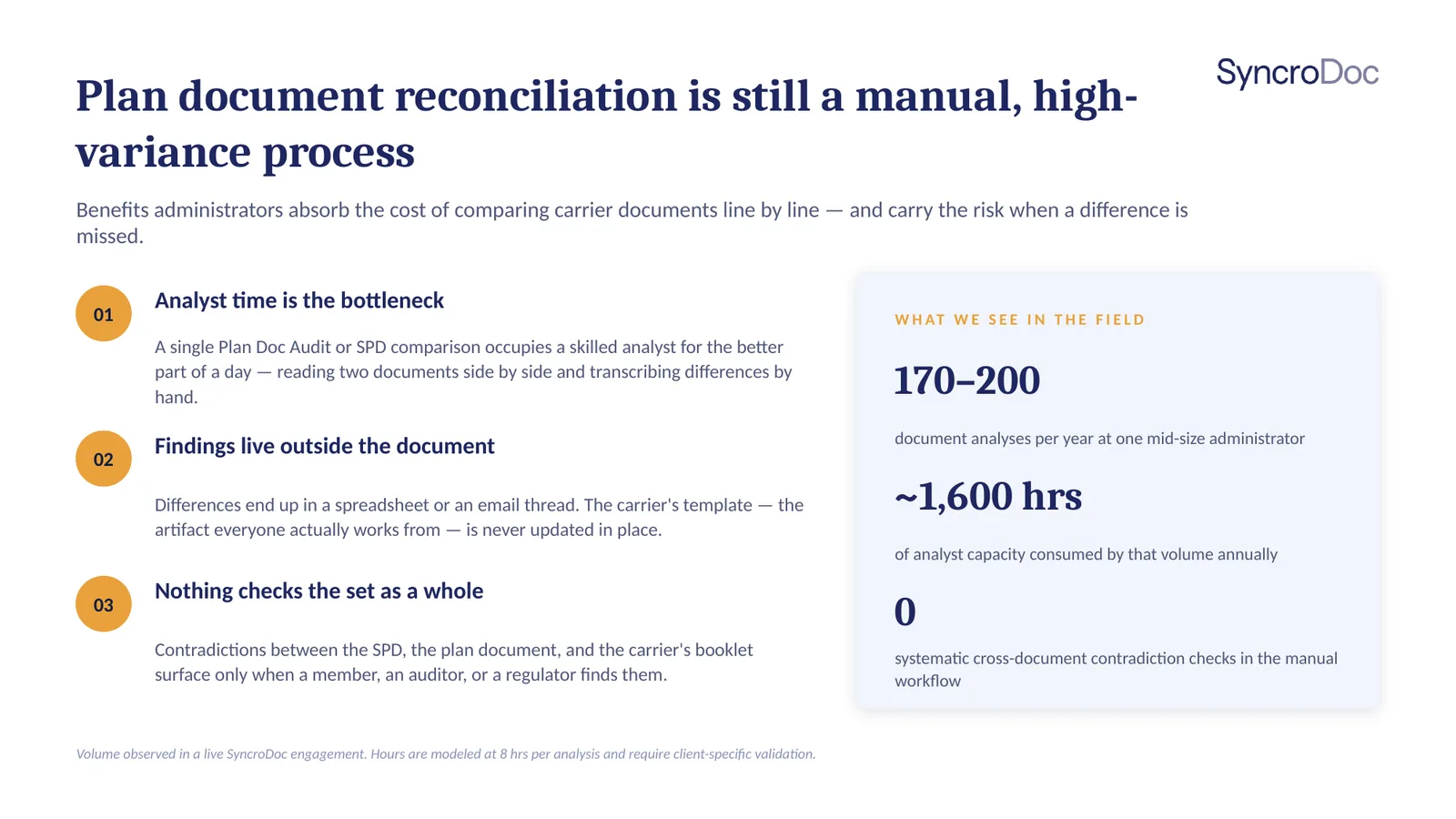
Plan document reconciliation is still a manual, high-variance process. Benefits administrators absorb the cost of comparing carrier documents line by line.

03 / 11

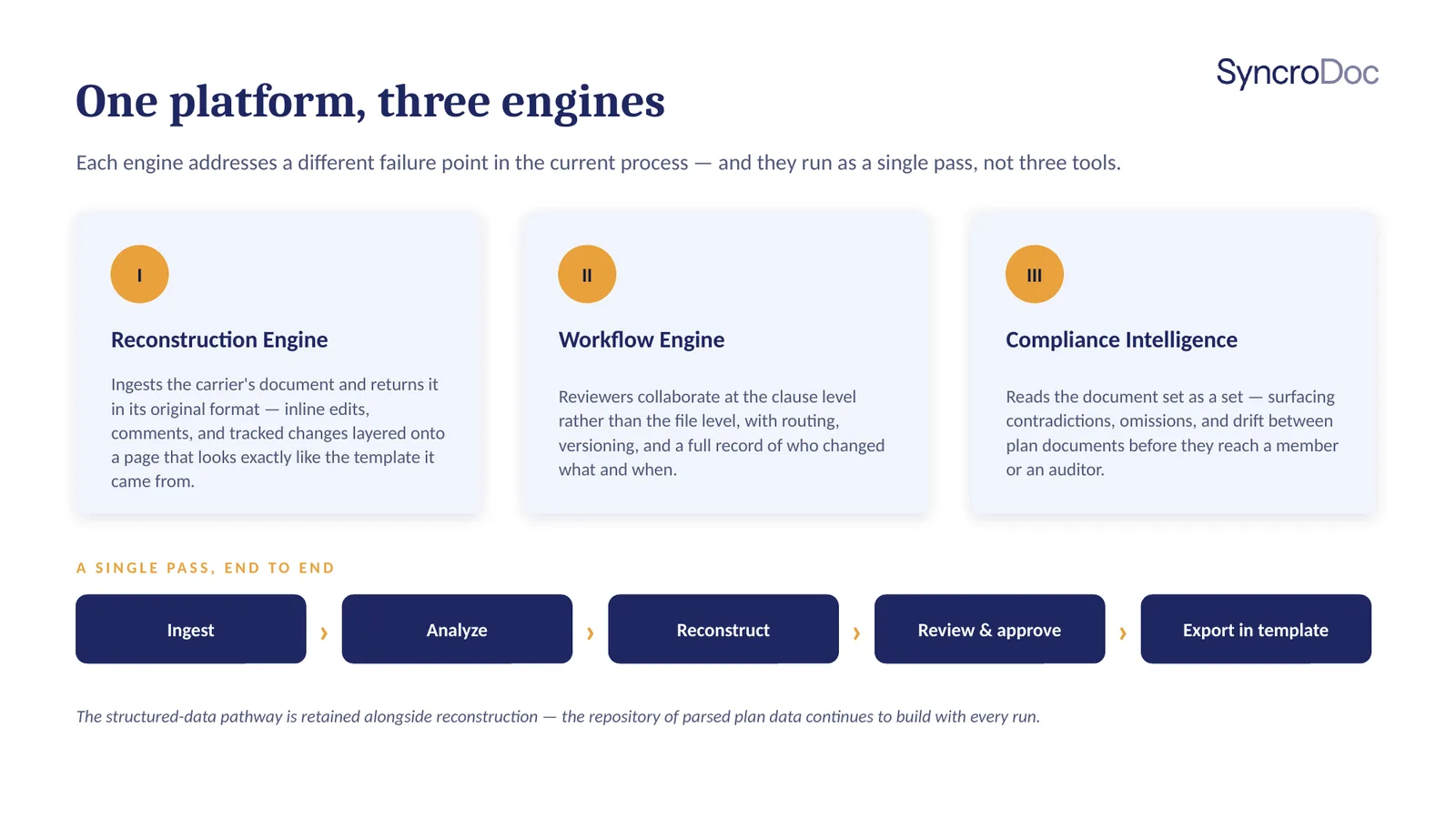
One platform, three engines. Each engine addresses a different failure point in the current process, and they run as a single pass, not three tools.

04 / 11

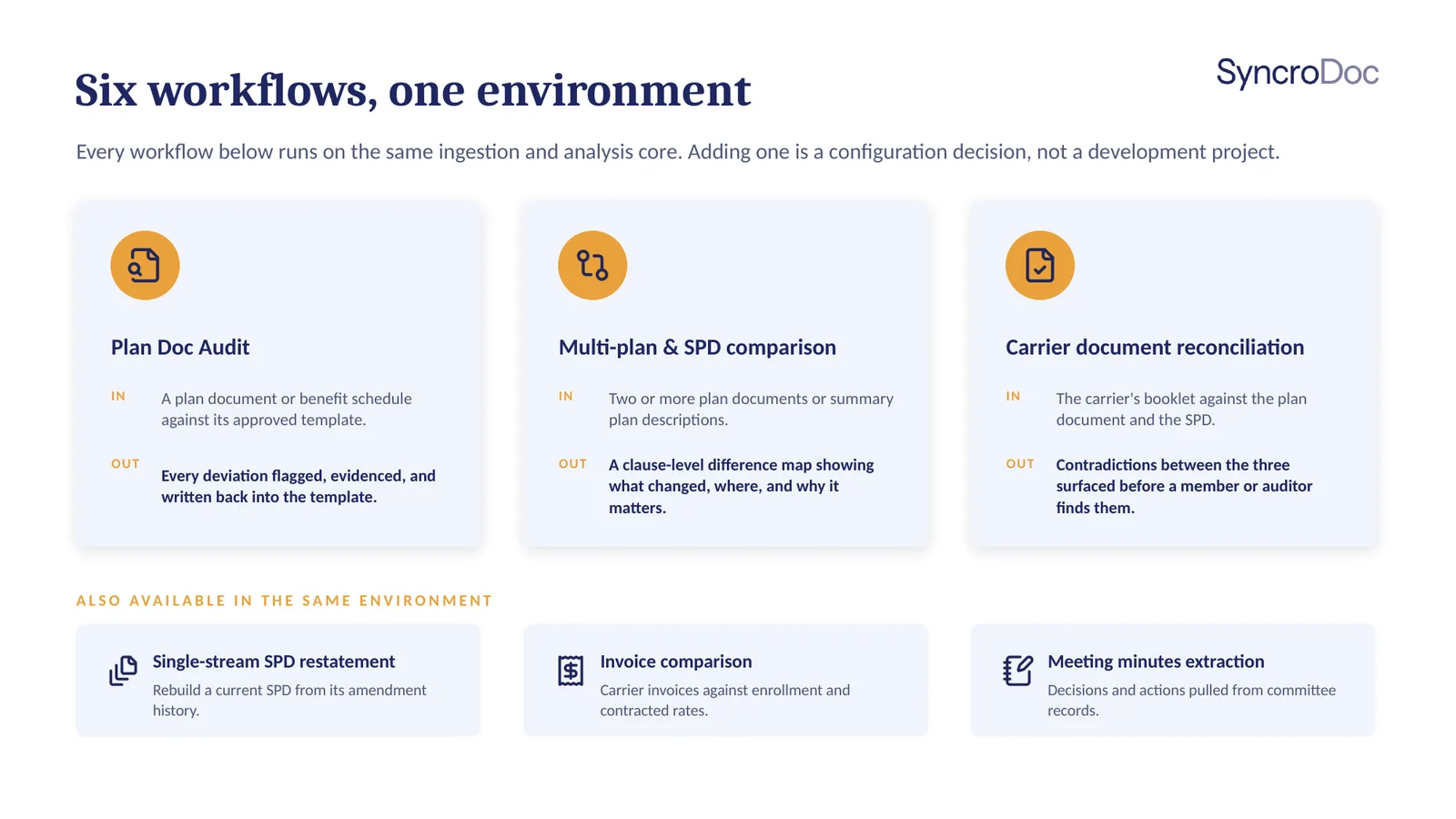
Six workflows, one environment. Every workflow runs on the same ingestion and analysis core. Adding one is a configuration decision, not a development project.

05 / 11

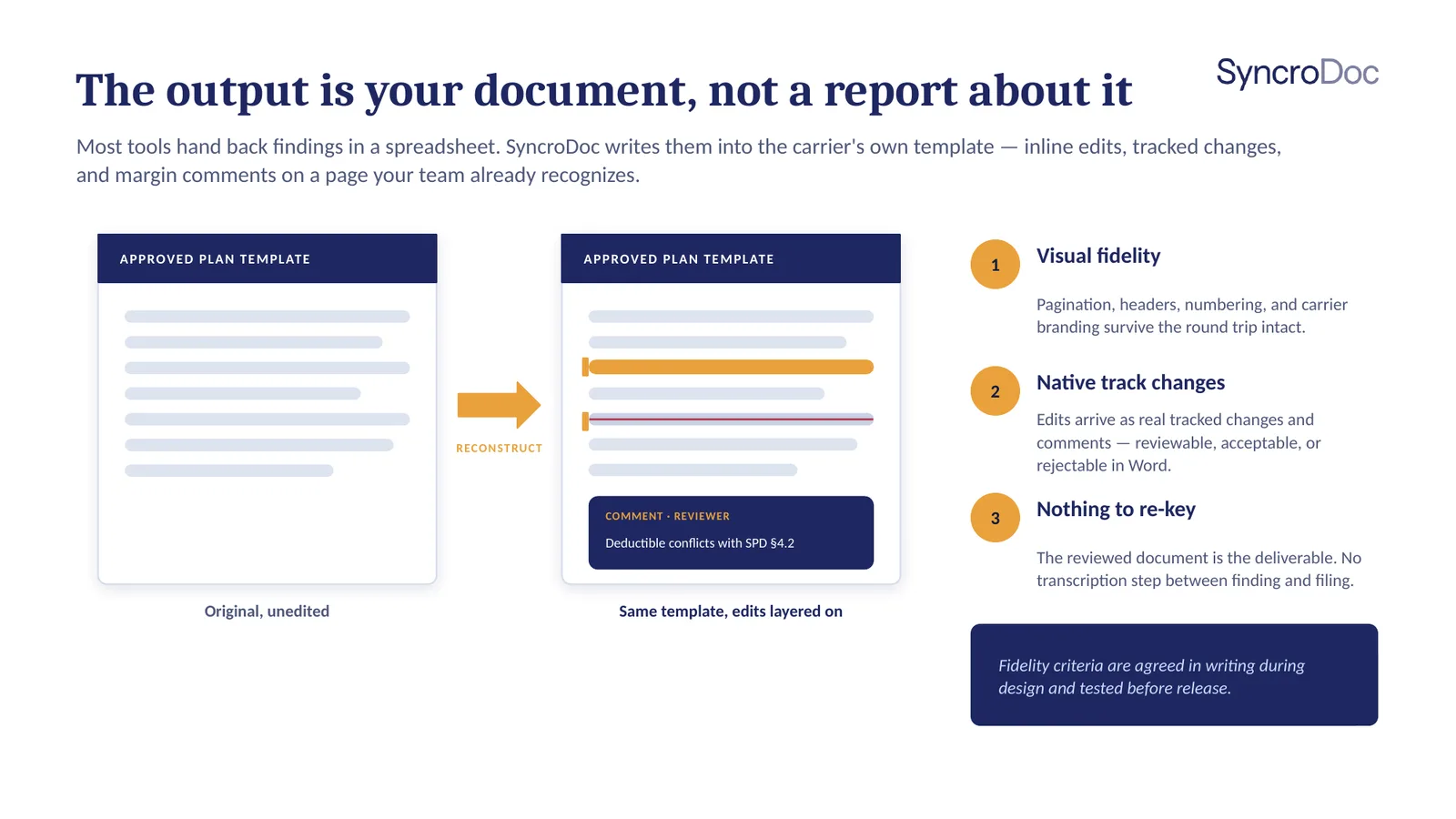
The output is your document, not a report about it. SyncroDoc writes findings into the carrier's own template as inline edits, tracked changes, and margin comments.

06 / 11

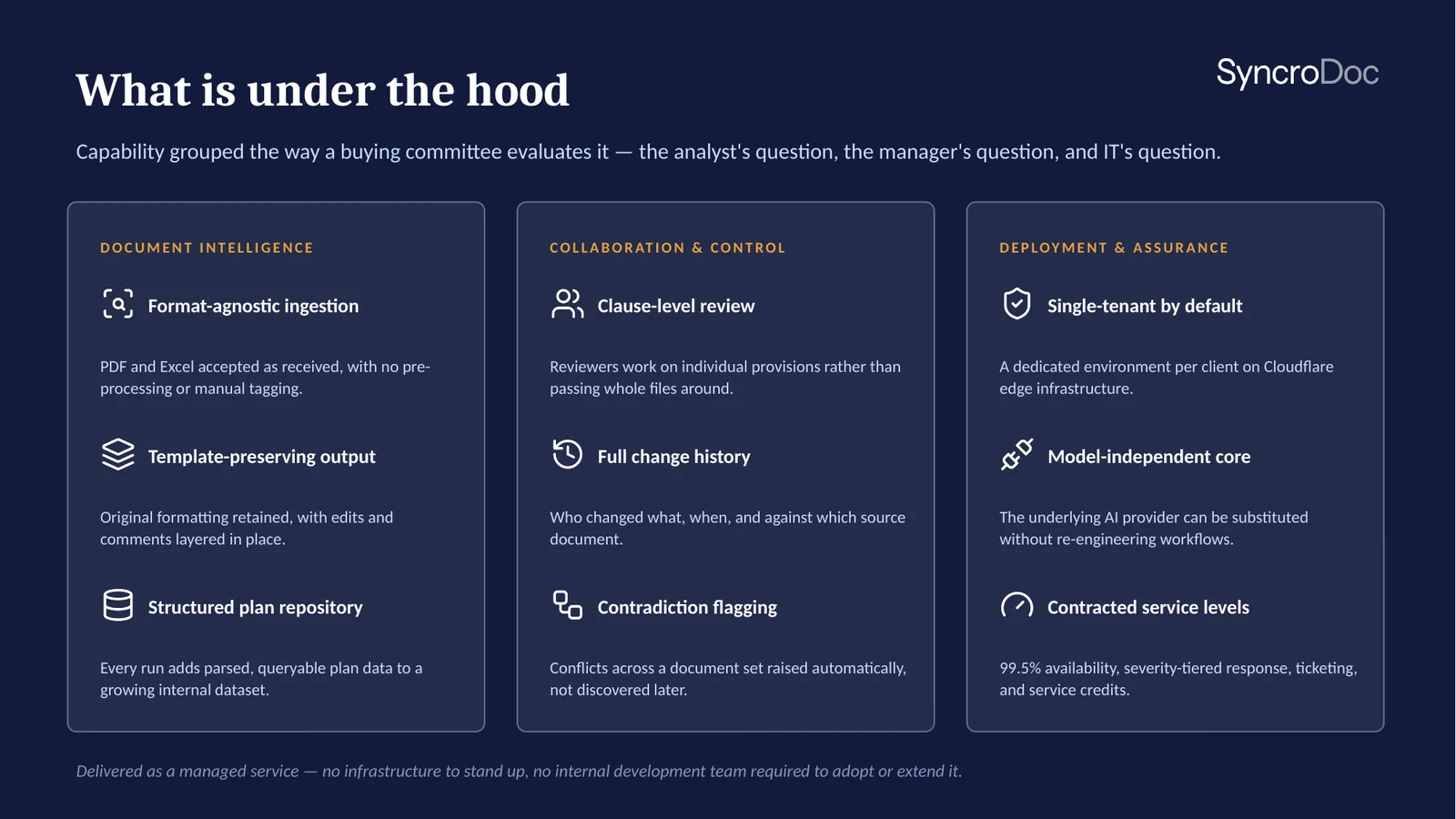
What is under the hood. Capability grouped the way a buying committee evaluates it: the analyst's question, the manager's question, and IT's question.

07 / 11

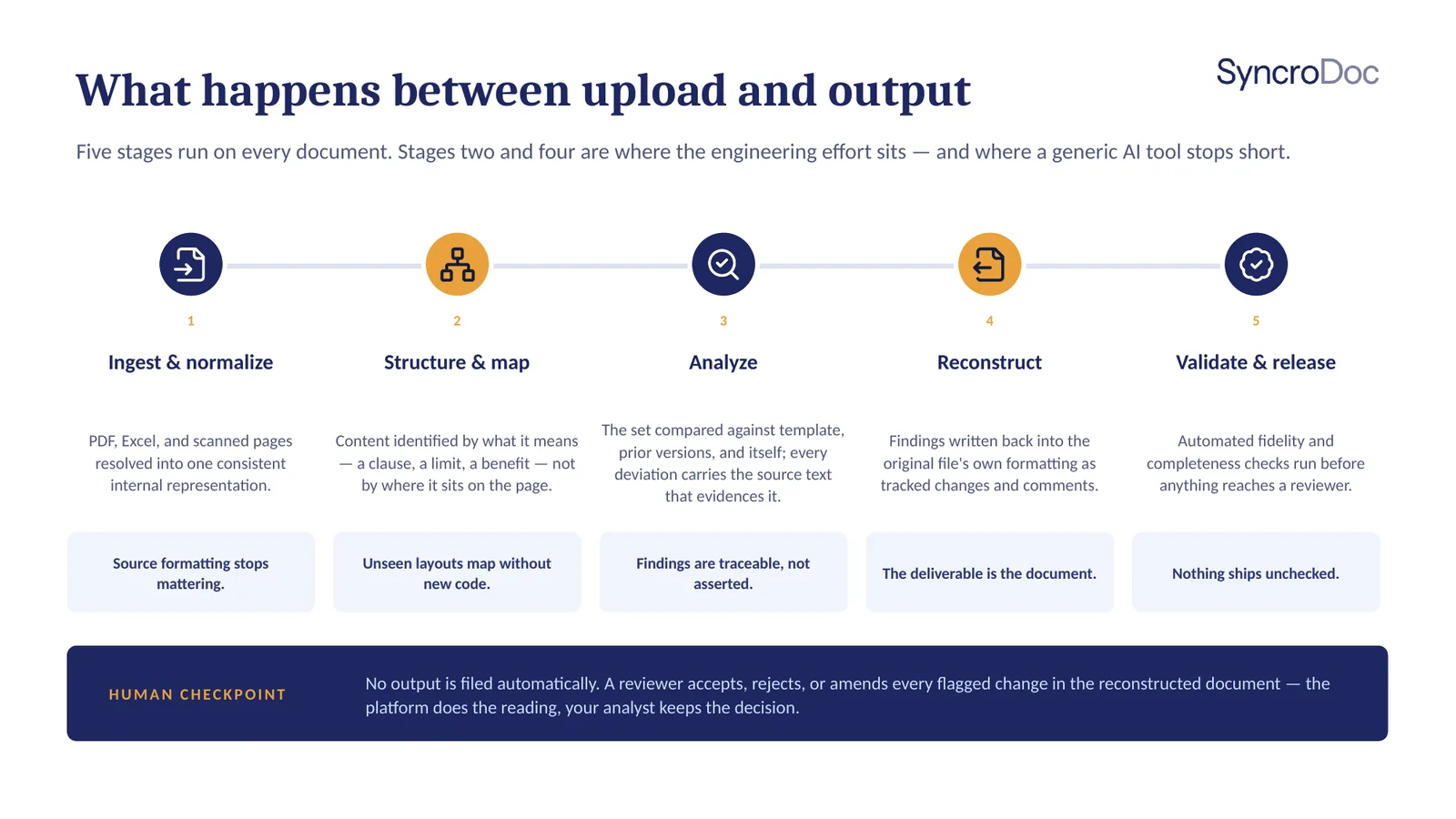
What happens between upload and output. Five stages run on every document: ingest and normalize, structure and map, analyze, reconstruct, validate and release.

08 / 11

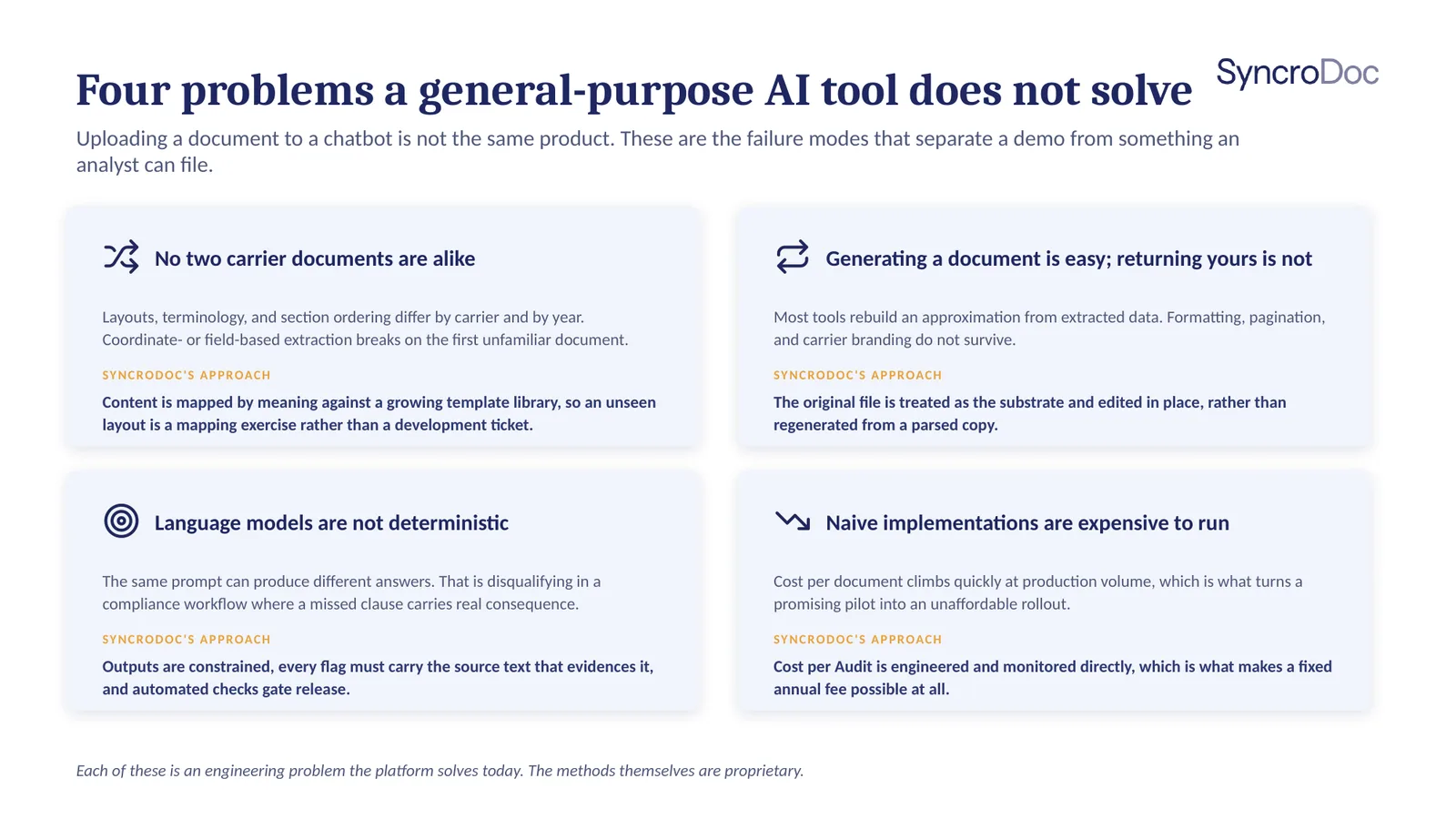
Four problems a general-purpose AI tool does not solve. Uploading a document to a chatbot is not the same product as something an analyst can file.

09 / 11

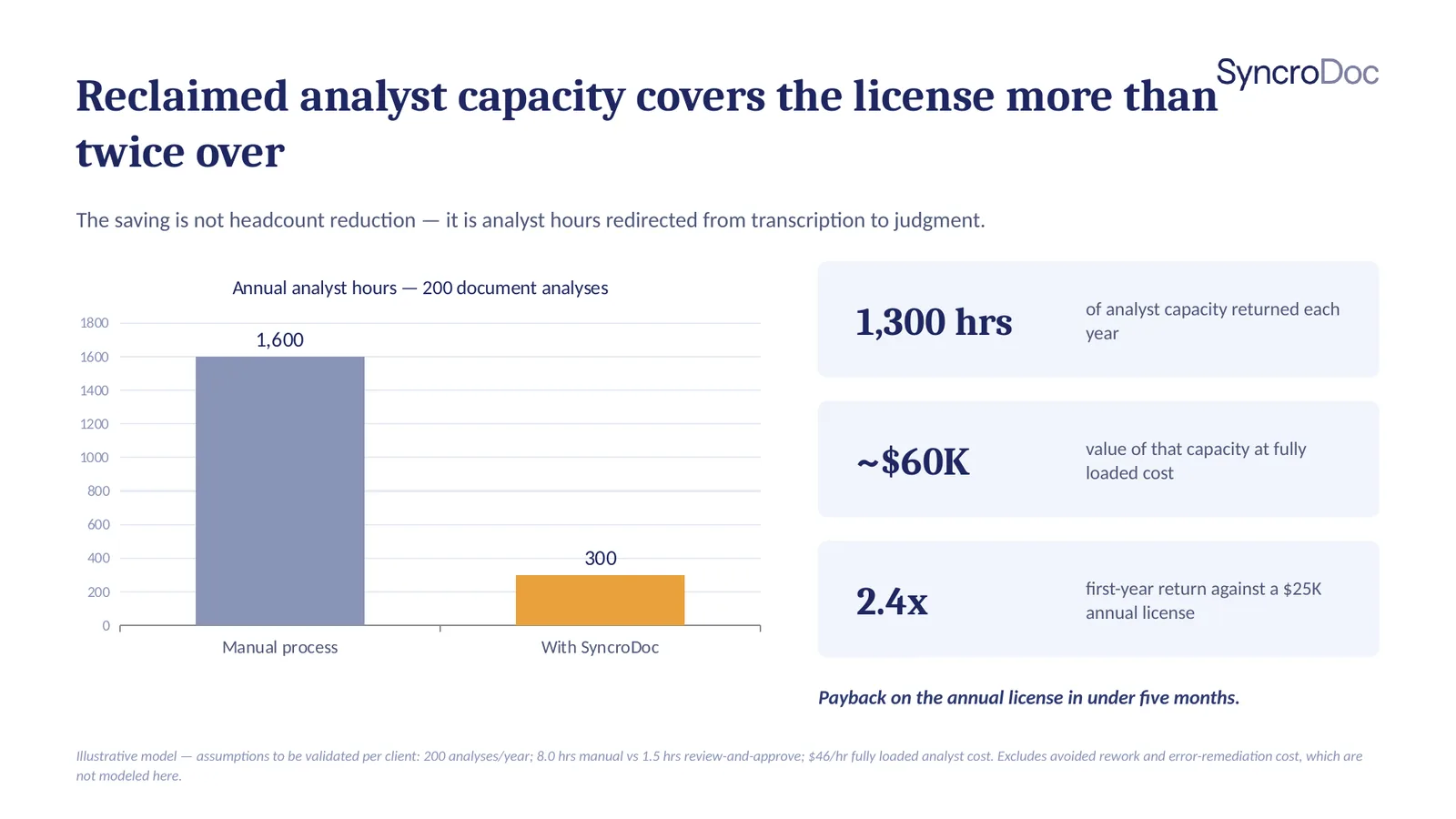
Reclaimed analyst capacity covers the license more than twice over. The saving is analyst hours redirected from transcription to judgment.

10 / 11

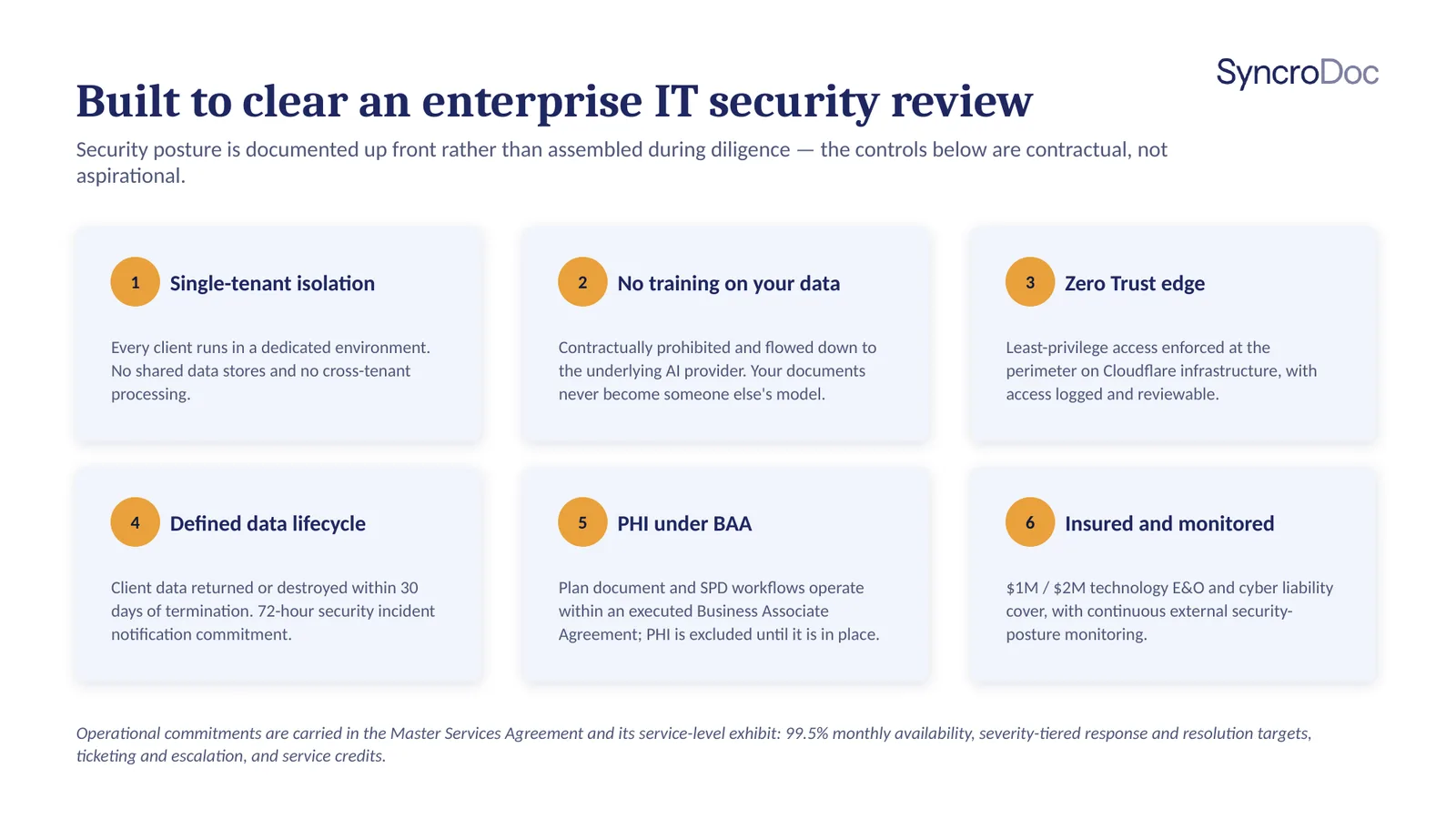
Built to clear an enterprise IT security review. Security posture is documented up front rather than assembled during diligence.

11 / 11

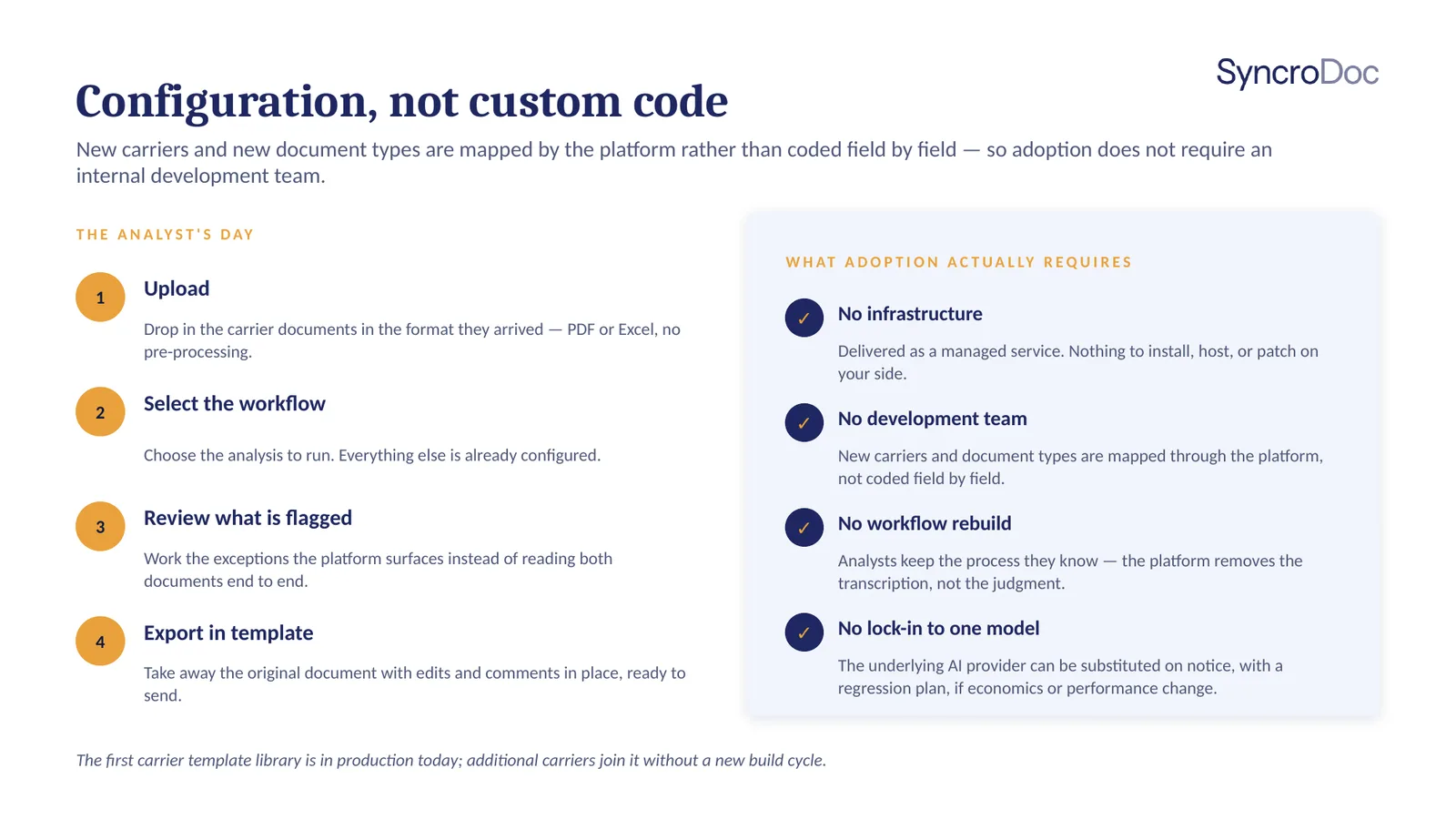
Configuration, not custom code. New carriers and new document types are mapped by the platform rather than coded field by field.
1 / 11